15

Now and then I am faced with claims that language A is better than B, because of some grammar rules or words or ...

But is there really a standard or a method to analyse a language from different perspectives and then rank it?

Possibly: (suggestions and not real questions)

  • Language is result of social consensus, so could we say less popular dialects or languages are inferior?
  • Could we rank languages by the average amount of times learners spend to be fluent in it? Ranking them harder and easier?
  • Could we from linguistics point of view decide on Semantics and grammar, etc; ranking languages on ambiguity, vagueness, illogic, redundancy, polysemy (multiple meanings) and overall arbitrariness?
  • Or simply compare languages based on their culture and historical background or any other possible measurement.
  • Or based on The average information rate conveyed during speech or written communication?

Finally if any such method exists will that be a partial comparison or will it be able to rank Language A as superior to B which will result in the best(or most efficient language) in the world?

azerafati
  • 269
  • 1
  • 2
  • 10
  • Well, you can, but it doesn't make much sense. Languages which are more complex and tend to take longer to learn, also tend to be more expressive. Another issue is that as English speaker you can learn Germanic and Romance languages much easier, while a Croat can learn Slavic languages easier. No language is ultimately superior. – Matthias Schreiber Jun 28 '16 at 08:29
  • @MatthiasSchreiber, yeah seems the probable answer. but anything more solid to back it? – azerafati Jun 28 '16 at 08:37
  • 5
    No. Of course not. – curiousdannii Jun 28 '16 at 13:07
  • 4
    No. ----------- – Greg Lee Jun 28 '16 at 13:34
  • 2
    I was once told that the English language was considerably fail-safe. That meaning can it be used most incorrectly and still be workable. Case in point. I do not know if this is correct. – Gabriel Fair Jun 28 '16 at 14:51
  • Good answers below. You would definitely need to put in parameters in order to quantify how good or bad a language is. Being a programmer it is easy for me--the language with the least amount of exceptions wins! "A, E, I, O, U, and sometimes Y" What is this sometimes crap :) Looking at my kid watching me try to explain why the letter "o" sounds different in like 10000 different situations is priceless! – Jeff.Clark Jun 28 '16 at 15:46
  • Well you can, but almost all human languages would sit very near the bottom. Why do we even care? – Joshua Jun 28 '16 at 16:08
  • @Joshua I'm just trying to put an end to useless discussions which try to convince me their native language is better than mine. But with a logical and scientific proof – azerafati Jun 28 '16 at 16:20
  • 1
    @azerafati: There's only one approach I know of. Some languages have the construct where a double negative is still a negative; this makes reasoning in such a language hard. But correcting that by deliberately warping the grammar is easier than learning a new language. – Joshua Jun 28 '16 at 20:41
  • 1
    What if I created a language that encapsulated all the languages? So every word in every language was valid in this new global language. Would the global language be better or worse than the others? – Chase Roberts Jun 28 '16 at 20:51
  • 2
    @azerafati "put an end to useless discussions" - forget it, you will hardly ever succeed in proving anything to such people :) It's like in religion - if someone truly believes in something, you can't prove him wrong... – tum_ Jun 28 '16 at 21:24
  • @azerafati It would be better to phrase the question as "Why can't we consider any language as superior to another?" Writing it like this makes it look like you expect a positive answer, which is of course ridiculous. – curiousdannii Jun 28 '16 at 22:15
  • 1
    @ChaseRoberts If you do what you described, you didn't actually create a new language, you simply created a lexicon. This is what also many conlangers do when they are still unexperienced, because they don't realise there is more to a language than only the words. How would you assume such a "global language" to look like? What is a "word"? What is the grammar? You have to decide for a grammar in the first place. If you start from Chinese and simply add all the words that occur in any language, how would you form sentences? Would you still have isolating morphology, as you'd expect if you ... – Natalie Clarius Jun 28 '16 at 23:59
  • ... try to subsume everything under one overall grammar? What about words from Hungarian, Turkish, Finnish or, to make it worse, something Tiwa (a polysynthetic language) then, which express way more complex expressions or even whole sentences with a single word? Would such words still be "valid" in a language that doesn't even permit something like noun incorporation and has its grammar rules adapted to a completely different organisation of the word system (and there must be at least some kind of grammar)? ... – Natalie Clarius Jun 29 '16 at 00:00
  • 1
    ... It is simply not possible to create a "global language" that subsumes every single word or feature there is, because many of those features a incompatible, even contradictory with each other. – Natalie Clarius Jun 29 '16 at 00:00
  • You'd need to unify many factors before attempting any kind of comparison. Teach the languages being compared to otherwise similar test groups. Use a unified alphabet (Huffman-coded?). Monotone pronunciation, no body language. And you thus lose most of what makes the language. – kaay Jun 29 '16 at 09:43
  • 1
    I think the answer is no, but the Esperanto movement would probably try to convince you otherwise, so this is a worthwhile question to ask. – Golden Cuy Jun 29 '16 at 12:34
  • 14
    English is the only language where the words come in the same order that I think them; plainly it is the best language. It is surprising that anyone uses other languages! Those poor French speakers who think "the white dog" and then have to mentally put the adjective after the noun when they say it; one wonders how they manage. – Eric Lippert Jun 29 '16 at 15:02
  • 1
    @Jeff.Clark: it is crucial to distinguish spoken and written language. The 10000 ways that O is used is just a stupid artifact, it is not the English Language. O is O is O, no one is ever confused when they hear it. (Just try to keep it down, though, OK?) –  Jun 29 '16 at 15:51
  • @EricLippert French speakers don't thing "the white dog", they think "the dog is white" ;) It all depends what comes first to your mind, is it what you describe (a dog), or how it looks (white). Both ways can make sense – ppetrov Jun 29 '16 at 15:54
  • 2
    @ppetrov: I know. I was making a perhaps-too-subtle joke on the supposition of the question: that one language could be objectively superior to another. This joke is not original to me, and of course it translates into other languages nicely! – Eric Lippert Jun 29 '16 at 17:11
  • Comments are not for extended discussion; this conversation has been moved to chat. – prash Jun 29 '16 at 17:46
  • @EricLippert sorry, I misunderstood the intention, now that I read it again .... :) Nice one ;) – ppetrov Jun 29 '16 at 18:15

10 Answers10

29

No. Language is not something that can be "better" or "worse" or in any way objectively be "ranked". This would scientifically be totally untrustworthy.

Going through each of your points:

Language is result of social consensus, so could we say less popular dialects or languages are inferior?

Popularity of a dialect or language depends on so many factors, most of which are purely cultural ones that are only allegedly in any way related to a language. Such prejudices arise from complicated social factors accumulating, but just because you hate a nation and like to make fun of their language because they sound different or "stupid" doesn't make the language a bad one.

Could we rank languages by the average amount of times learners spend to be fluent in it? Ranking them harder and easier?

Not either. Even if it were possible to objectively rate learnability of a language (which isn't so easily possible, because it depends highly on the individual speaker and also at which point you assume that a language is fully, halfway, ... acquired), the size of the lexicon or set of grammar rules doesn't make a language qualitatively better or less good. Both can have advantages or disadvantages - learning lots of grammar rules may seem difficult first, but it might help you expressing things way more precisely than with rather simple and widely applied grammatical constructions.

Could we from linguistics point of view decide on semantics and grammar, etc; ranking languages on ambiguity, vagueness, illogic, redundancy, polysemy (multiple meanings) and overall arbitrariness?

This still seems the most reasonable linguistic approach to me, but I am convinced that every language is equally powerful.
For example, there are languages which have evidentiality affixes (so you indicate directly at the verb whether you know what you are saying by having seen it yourself, concluded it by logical reasoning, only from hearsay, ...) so you might think those langauges are more powerful, but still it is totally well possible to express the same in English by means of constructions like "The children must be awake, I hear them talking" or "They say she broke up with her boyfriend".
In general, there is always a trade-off between economy of the language's inventory and economy of the way things are expressed - a small vocabulary and simple grammar may be economic in the way the langauge is less bloated, but at the same time you then need more complicated ways to use it if you want to express the same thing (like English having no evidentiality affixes and making use of syntactic means instead). Conversely, if a language permits expressing a lot of slight meaning differences by explicit linguistic means, this is again uneconomic with respect to the size of the inventory the language needs to have then.
What would you define perfect balance on, what is the optimal ratio of language complexity and expression complexity?

Or simply compare languages based on their culture and historical background or any other possible measurement.

What do you mean by that? Japanese is a worthless language as opposed to Latin because the Romans had a huge empire two thousand years ago? Finnish is superior to English because American metal music sucks? This is totally absurd.

Or based on the average information rate conveyed during speech or written communication?

This relates to what I wrote about the third point: This would still come closest to a linguistically sensible way to measure a langauge "quality" based on efficiency, but since there is always a trade-off between complexity of the language's lexical and grammatical inventory and complexity of the language's expressions to express the same amount of information, there is no objective way to determine the "ideal language".

Linking up with what @A. Toumantsev commented (thanks for the amendment):
It is indeed possible to measure single parameters like estimated size of the lexicon, complexity of inflectional paradigms for certain classes of words or text length in relation to the amount of information conveyed as the paper you mentioned did, and it is as well possible to compare these reults between selected languages.
But it is not possible to derive any sort of objective "ranking" from such comparisons; there is no linguistically motivatable judgement about something like superiority or inferiority of a natural language, neither based on features that are actually measurable and even less on solely socially motivated and therefore linguistically completely irrelevant individual or cultural preferences.

You can not just "rate" a language. You can rate something according to to which amount it suits the purpose it was designed for, possibly also with which efficiency it does so. But language wasn't designed by anyone, language evolved over thousands of years from humans simply using the language, and the purpose which language is meant to fulfill is communication - which does work, in any language, regardless of whether you like the sound of nasals in French or consider a country culturally surperior to another because it has managed to kill more people in the past. (Not presuming this is what you think! Just exaggerating to show why I think this is so absurd.)
Such individual emotions have nothing to do with serious linguistic science, and I encourage you to distrust anyone who makes assertions like "This language is so primitive, just like the people who speak it" or "See, I've been learning that language for two years now and I still keep making mistakes, this language is complicated and useless" or "Well, I think we all agree that Swiss German sounds just ridiculous, real German is so much better" or "Oh no, English grammar is so complicated, who even invented those rules, it is so obvious that my mother tongue does it the way that makes way more sense, any linguist will tell you so". No, just.. no ;)

Glorfindel
  • 437
  • 1
  • 6
  • 19
Natalie Clarius
  • 6,499
  • 4
  • 21
  • 40
  • Thanks, nice answer! Though they are not my points. I just tried to suggest and ask if there is any systematic and scientific ranking for languages. – azerafati Jun 28 '16 at 08:58
  • 7
    I didn't mean to attack you, maybe I formulated my points to hard. I think I kind of talked myself into a rage because all those points seemed so absurd to me as a passionate linguist ;) – Natalie Clarius Jun 28 '16 at 09:01
  • 1
    Upvoted @lemontree's answer. You stole my chance to give one but I wouldn't be able to type that much text, anyway ;) Actually, my brief variant of an answer would be something like this: the answer to all the points starting with 'can we/could we' is mostly (with a few restrictions) Yes - we can compare this and that. However, the answer to whether we can rank a language as superior/inferior based on such comparisons is definitely No. – tum_ Jun 28 '16 at 09:25
  • @lemontree, totally agree with you but the point of the person about cultural background was more like, the A language has managed to include big amount of literature and poets, who also helped the language to be developed into a better one than language B which lacks that amount of literature – azerafati Jun 28 '16 at 11:51
  • That doesn't seem to make any sense to me. How would the amount of poems someone prodcues affect the "quality" of the language that is spoken in that culture? Language isn't defined on how may books are written in that language. If this were so, a couple thousand languages would be totally worthless just because those languages don't have an own writing system (or at least didn't have one for millenia). – Natalie Clarius Jun 28 '16 at 13:26
  • 2
    Also: It is nonense to say "the language has managed to include [...] literature", because it's not the language that is responsible for what kind of stuff people write. And "the language to be developed into a better one than [the other language]" - this is so polemic, I wouldn't even know where to start explaining why such statements lack any factual basis for discussion... – Natalie Clarius Jun 28 '16 at 13:47
  • 2
    (...)I am convinced that every language is equally powerful. If that was true, how would languages evolve? English is superior to caveman language, isn't it? –  Jun 28 '16 at 14:47
  • 1
    @Stefan: ugh? Ugh u ruu. Ru ugh! – leftaroundabout Jun 28 '16 at 18:44
  • 2
    @azerafati: FYI, this is what always happens when people ask questions about better in the context of languages. Languages are tools -- all-purpose tools, at that -- and their uses (like poetry or gossip or speeches) depend on their users, and their users' skills. Which vary. Who's better? At what? Which language is better? For what? All these are individual, and inevitably personal, standards. What's the best ice cream flavor? Can you look it up on Google? – jlawler Jun 28 '16 at 19:31
  • As I said above I'm sure that languages can't be ranked in terms of 'better/worse', 'superior/inferior'. However, @Stefan's remark on caveman language drew my attention. Well, we know nothing about caveman language but certain theories on human speech genesis suggest that human language(s?) evolved from some 'primitive' systems to more elaborate. And in this sense (assuming such theories tell the truth, which is not proven) it must be possible to talk about 'superiority/inferiority'? Putting a question mark as, to be honest, I'm still not convinced and I'd like others to comment on this. – tum_ Jun 28 '16 at 21:18
  • 3
    @A.Toumantsev If you cull vocabulary enough you will find that it becomes difficult to communicate, but you'd be hard pressed to find a living language that didn't have a way to adapt to new concepts. This adds another dimension to the subjectivity--is the fault of the caveman language really the language itself or the capability of the speaker? What is the difference? Dead languages are inferior to living languages because there are no speakers to adapt, but as long as a language is living it is as competent as its group of speakers. – called2voyage Jun 28 '16 at 21:51
  • @A.Toumantsev "I'm still not convinced and I'd like others to comment on this" That was exactly my thought :P – Natalie Clarius Jun 28 '16 at 22:19
  • 1
    @Stefan I have to admit that I don't have an overall convinging counter-argument to the caveman example. I would save my claim by assuming that 1) a) the mental abilities and b) the range of things that it was i) possible and ii) important to talk about (you probably don't care too much about relativity theory if you're busy enough getting your next meal) of the humans back then itself was not as evolved yet, ... – Natalie Clarius Jun 28 '16 at 22:20
  • 1
    , .. but esp. b) is a dangerous claim in that you could now come up with "but what about cultures who don't have as much science and philosophy as other cultures do" which I really would feel uncomfortable to start a discussion about; still I do think that the modern human being has different requirements on language than a cave man did. 2) that even given that the very first stages of human language didn't suffice to express everything that needed to be expressed, language has evolved so enormously since back than, and this development having taken place... – Natalie Clarius Jun 28 '16 at 22:20
  • 1
    ... paralelly across all human language and in constant contact to neihbouring languages, that I would dare to say we are now at a point where we would expect natural languages to be similarly powerful simply because there has changed such a lot since "uga uga" back then and because languages don't evolve isolated, but always in close company to at least some of the other languages of the world. But yes, I think I can't refuse the claim that a language like English can undoubtly be regarded as more powerful than a language consisting of maybe 50 word chunks. – Natalie Clarius Jun 28 '16 at 22:21
  • 1
    Thanks to azerafati for triggering such an interesting discussion (much better than "is this phrase grammatically correct?" type of questions). A very important point has been brought up by both lemontree & @called2voyage that a language cannot be "assessed" separately from its users. It appeared, developed and now exists (and keeps evolving) solely due to and in line with its users' needs. Whenever a new need arises that a language does not cover - a new construct/word/phrase is coined that fills the gap and is quickly accepted by all speakers/writers. Hmm, I'm stating the obvious .. – tum_ Jun 29 '16 at 04:51
  • .. and still nowhere near a thought I was hoping to formulate when I started this comment ;) Need another cigarette... – tum_ Jun 29 '16 at 04:52
  • .. Therefore one of the many reasons why it is difficult or, in fact, impossible to compare languages in terms suggested in the original post is that the needs of different peoples widely vary. While English, French or Russian have produced great literature (which is intuitevely considered by many as a sign of a 'top rank' language), the Innuit language did not. But I'll hardly be too far from the truth if I say that Innuits would call English, French or Russian terribly poor languages for their needs, where instead of using a couple of simple phrases precisely describing where to go... – tum_ Jun 29 '16 at 06:43
  • to hunt a walrus, one would have to use loads of ambiguous, lengthy & cumbersome instructions, epithets and what not ;) – tum_ Jun 29 '16 at 06:46
  • "This still seems the most reasonable linguistic approach to me, but I am convinced that every language is equally powerful" This implies that you somehow can measure that. If there is no measure there is no equality. But the whole point of your answer is that you can't measure this. This sounds contradictory. – Andrew Savinykh Jun 29 '16 at 07:25
  • @zespri My point was that you can measure individual parameters, but you can not make a linguistically motivated judgement about superiority or inferiority from those individual parameters. I also didn't mean to imply that you can actually measure expressive power in terms of having a reliable norm rather than just single measure points of specific features. My claim stays vague (and Stefan actually already pointed out a flaw in my argumentation) and I tried to emphasize this vagueness (in fact this was my main point), so I wouldn't say I contradicted myself. Will clarify some more in my post. – Natalie Clarius Jun 29 '16 at 07:44
  • Comments are not for extended discussion; this conversation has been moved to chat. – prash Jun 29 '16 at 17:46
16

No, this is not possible.

As already said by lemontree, most of these points are just totally subjective criteria that you can't possibly rate impartially.

The only points where one could see some chance to come up with an objective rating are the 3 and 5: ambiguity and conciseness. Indeed, as the paper you've linked shows, it is possible to empirically compare information content by comparing, for certain sample texts, how much information they pack.

Trouble is that's there's not really a reliable way to tell what information content even means. You can in any language express a given information in many different ways. Finding the most concise way is an uncomputable problem, even for rigidly specified programming languages (this is called Kolmogorov complexity). It's even more hopeless for natural languages, where it's often not even possible to say whether two samples express the same information. Hence you also can't judge whether language A has more ambiguity than language B, or just more subtle nuances.

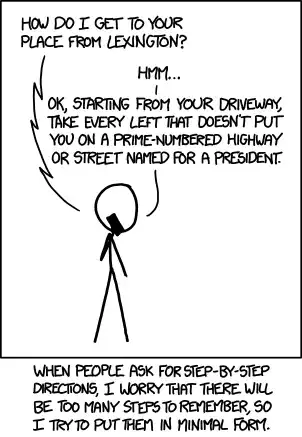
Obligatory XKCD:

XKCD comic on Kolmogorov complexity in natural language


It is possible to measure the total information content of a binary data stream, of of a physical signal channel. But this has little relation to the actual information content in languages, except by giving an absolute upper bound to what amount of information can theoretically be contained in printed text. Actual language gets nowhere close to that bound.

leftaroundabout
  • 446
  • 2
  • 7
  • 5
    +1 for XKCD. It nails it! – Peter M. - stands for Monica Jun 28 '16 at 18:14
  • There are actually computational linguistic approaches to measure something like propositional idea density based on linguistic features to estimate the amount of information conveyed, but of course, this can only give very vague results. – Natalie Clarius Jun 28 '16 at 18:21
  • And only in the coding system used by the programmer, which is unlikely to be natural. – jlawler Jun 28 '16 at 19:25
  • Consider The Smallest Number Not Nameable in Less Than Eighteen Syllables. – Colin Fine Jun 28 '16 at 20:17
  • @jlawler What do you mean? That the individual properties of the programming langauge restrict the possibilities of an in-depth analysis? – Natalie Clarius Jun 28 '16 at 20:36
  • No; by "coding" I meant "data coding" -- i.e, the categorization of natural language chunks as meeting (or not meeting) arbitrary standards of what the experimenter chooses to call "density", or some other suggestive name. – jlawler Jun 28 '16 at 21:07
  • 1
    @jlawler Well, it is not entirely arbitrary, people who do things like this do have some idea of language and I think some linguistic parameters like the amount of lexical verbs, number of entities (i.e. referents), syntactic constructions like "if ... then ... else" are not completely irrelevant to the question how many propositions are asserted in a text. – Natalie Clarius Jun 28 '16 at 21:55
  • 2
    In fact, I'm currently having some code for such density measurement in front of me, a slightly above thousand lines of Java code based on 634 rules (and this is only for the extraction of the actual propositional density, the code for extracting the counts and features like number of certain word types or ratio of specific constructions is not counted in) most of which I don't find too unreasonable. But as I said, mesaurements like this can only stay very vague, in this I agree, but I wouldn't call such attempts completely arbitrary. – Natalie Clarius Jun 28 '16 at 21:55
  • 2
    @lemontree: 634 rules in only 1000 LOC of Java? Wow, that has to be close to Kolmogorov, considering the language's reputation as one of the worst possible tools for Code Golf... – leftaroundabout Jun 28 '16 at 22:14
  • 1
    Um, just realised that I must have referred to a wrong version or soething because over 600 rules within 1000 lines is of course pretty much impossible amounting to less than 2 code lines per rule... I looked at it agian and realised that quite a few numbers are skipped, possibly there used to be more once and the code has been significantly shortened. 1000 lines for 600 rules is of course implausible just as you say, I should have noticed this earlier, sorry for the confusion ;) – Natalie Clarius Jun 29 '16 at 00:29
  • "there's not really a reliable way to tell what information content even means" (I read your footnote.) You haven't seen a good way. That doesn't mean it doesn't exist and will never exist. If someone was to do the work of comparing languages and ranking them in various ways in a published work, they would presumably also take the time to spell out what "information content" means in the context of their paper. Then we could discuss the strengths and weaknesses of their methodology, rather than dogmatically asserting that their work isn't possible and will never be possible. –  Jun 29 '16 at 19:08
  • 1
    @r81 well, yes, the uncomputability of Kolmogorov Complexity does kind of mean that a reliable way to compare information content can never exist. There can certainly be useful heuristics, but it's provable that you can always write a text that will break the heuristic algorithm (i.e. underestimate its information content), because... ...er, how much to you know about computability theory? — For a serious example of a work that pretty much smashes any attempt to measure its information content, I'd suggest Finnegans Wake. – leftaroundabout Jun 29 '16 at 19:26
  • @leftaroundabout The fact that name-dropping is getting upvotes is not a good sign for this community. "Because of this theorem, it's impossible. I'm not going to explain why, but trust me, the theorem has a big name! But of course you knew that, because you must have some computationaly theory. And you've heard of James Joyce I presume? Why, of course you have, who hasn't! Here is a link to his book, it will get you up to speed on our conversation. By all means, you're welcome to join us when you decide to agree." Why do I even bother... –  Jun 30 '16 at 04:58
  • When I was learning Sinhala I read a statement that said that Sinhala newspaper headlines are almost always shorter than the same headlines in English, which was actually about the written, not spoken language. I thought, "Interesting, but so what? That doesn't make Sinhala better or worse than English, just different." – CJ Dennis Jun 30 '16 at 05:16
  • 1
    @r81: well, I actually agree, it's no good to argue with big names without substantiating what it all means. However, it's also not very practical to give an introduction about all the needed foundations in any StackExchange post about anything, hence my question where to pick you up. — Furthermore, I'm by no means an expert in computability theory, I've just heard some lectures on the subject. Indeed I'm being quite sloppy with my terminology here; for properly proving these things you'd need to define much more rigorously what you're talking about. I'm not qualified to do that. – leftaroundabout Jun 30 '16 at 09:57
16

This might be similar to asking "which is the best animal?" and "can we rank animals?".

Thinking this way highlights to me that we run into two (related) problems in ranking languages:

  • the definition of "best" and "superiority" can be measured along many axes, and any general statement of superiority would mean ranking and scoring those qualities (eg is "ease of learning" more important than "succinctness" etc)

  • you have to factor in the environment - it depends what you want the language for: legal precision? shouting across fields? After all, honey badgers rank pretty high on lots of measures, but that doesn't mean I'm in a hurry to get one as a pet.

One concept that might be handy here is that of Pareto Efficiency, which is important in understanding competing systems which have different solutions to their engineering compromises. It's possible that real languages will generally score well on some criteria, but are hard to improve without weakening them in another way. On the other hand, the "name name" example given by @EdwardKotarski weakens the language without much gain.

To answer your question: yes, we could evaluate languages according to the criteria you describe, and more - just like we can find the fastest fish. But extending that to a more general concept of "best" means selecting and weighting the criteria, and that's completely subjective: if you prioritize "good for communicating with Italians", then Italian will probably come out somewhere near the top.

SusanW
  • 282
  • 2
  • 7
  • 1
    Perfect answer! thanks. Though since the main goal of language could be defined as human communication. Couldn't we search for a language that covers all the necessary field in a balance that best suits the humans? One Ideal language easy to learn, succinct enough, clear, good enough for legal precision, easy to handle with the digital technology and so on? I understand that animals are evolved for real different situation and purposes but languages share many goals and use cases! – azerafati Jun 29 '16 at 13:18
  • 4
    @SusanW I liked this bit - "if you prioritize "good for communicating with Italians", then Italian will probably come out somewhere near the top" :) – tum_ Jun 29 '16 at 14:10
  • 4
    @azerati Alas, no. "a language that covers all the necessary field in a balance that best suits the humans" does not exist, I'm afraid. Humans have too different goals. "One Ideal language easy to learn" - any language is very easy to learn when you're a baby and everyone around speaks that language. Once you've grown up, though, the ease of learning a language greatly depends on what language happened to be your native. This has already been said in the comments. French is not too difficult for an adult Englishman but Russian is much more hard and Vietnamese is even more so (tonal). – tum_ Jun 29 '16 at 14:17
  • 3
    ... at the same time for a Chinese person the Vietnamese might well be the easiest to learn from the above list. Considering that, I can't imagine a language that would be easy for all to learn. "good enough for legal precision" - but bushmen in Kalahari do not need any legal precision at all, they need a language that fits their way of living and they do have such a language - their own(others are deficient from their point of view), the one famous of having those click/clack/kiss sounds produced on inhale rather than exhale, which most europeans would spend months to learn to pronounce. ;) – tum_ Jun 29 '16 at 14:26
  • Wait...dogs are the best animal. – Mitch May 19 '19 at 17:26
4

I'm going to break the trend a little bit and argue for Yes. Lets start with a single language and then make a stupid change to deliberately make it worse.

Original language: Hello my name is Ed
Modified language: Hello my name name is Ed

The single change is that every time you use the word 'name' you have to include it twice. This is quiet clearly ridiculous and redundant. Given that this is the only change, I think it can be concluded that the original language is better.

I think that the fact that a single change can make a language better or worse shows that extensive changes can make a language better or worse and thus one language can be objectively better than another.

You could probably rank languages by different aspects. Written conciseness for example: When instructions are printed in multiple languages, some translations are shorter than other. Take many samples and compare.

If you then took the language that scored the highest average rank, you could label it as the 'best' language but I don't think this would cut it.

If everyone in the world suddenly knew every language fluently then the language they ended up communicating in could be considered 'best'. It would likely be a mix of the best ideas from all of them.

------- Semi-related Point Below (a bit prescriptivist beware) -------

The letter Q (or at least its usage) is an example of redundancy in the English language. In the vast majority of its usage in everyday language it is followed by a U. In all other cases I know of it can be pronounced as a K. In the latter case the Q could be replaced by a K and QU could be replaced by just Q (or even better KW).

The letters S, C and K do not all need to exist in the English language. The soft C can be replaced by S and the hard C can be replaced by K.

(Ignore this <) Finally the letter H is just the worst. It's not a proper consonant. It should be a accent. All other consonants can be put after a vowel and make a proper sound (ab, eb, ib, ob, ub). H is a Horrible exception. (>)

------- The bit where I changed my mind -------

My point is that although languages are a great and wonderful thing, they evolve just as animals do (when was this my point?!). In that evolution they get random mutations that can be helpful or can be harmful or can have no effect.

Huh okay. I just changed my mind. Like animals languages evolve to fit their surroundings (think how Eskimos apparently have x number of words for snow), this may be best for them but would be redundant for us.

So in my opinion there can be no 'best' language. Although languages can be 'best' for a purpose and can be improved.

  • 4
    Good point, but there can be many arguments against. Quite a few languages omit "is" in this phrase: "my name Ed", obviously, implying the verb. But implication inevitably brings vagueness. The problem with the question is that it asks for "better" without the definition what is "better". One would say, succinctness is better, while others would say, specificness is better, or transmission error tolerance, or many other factors. As these properties contradict each other, they can't co-exist. Hence, there is no ultimately "better" languages. – Be Brave Be Like Ukraine Jun 28 '16 at 23:26
  • 1
    @EdwardKotarski I agree that an example like the one mentioned by you could be a criterion for a language being supposedly less "good" by having grammar rules that make expressions more complex while not contributing anything to meaning, but such entirely non-advanteagous features are just unliekly to occur in natural lanauge. Languages are pretty good at maintaining efficiency; as soon as a word or grammar rule isn't really of avail, competing expressions will sooner or later either diverge into more meaningful distinctions (like synonyms becoming polysemes or homonyms over time)... – Natalie Clarius Jun 28 '16 at 23:29
  • ... or simply eliminate one of the duplicate expressions, wherever possible the more complicated, ambiguous, ... one; everything else is uneconomic and langauges generally just don't behave like this. – Natalie Clarius Jun 28 '16 at 23:29
  • 1
    So your idea is basically comprehensible, but I don't think you would find actual natural language examples comparable to the amount of redundancy you provided as your argument so I'm not sure think your reasoning would really be applicable. If you can provide me valid conter-examples, I am willing to revise my claim. – Natalie Clarius Jun 28 '16 at 23:45
  • 1
    "I think that the fact that a single change can make a language better or worse shows that extensive changes can make a language better or worse" This is basically the argument of the beard. Suppose instead of doubling the one word there was a completely different two-syllable word for name when used in this context? Would that be equally redundant, more redundant, or less redundant? So is it the redundancy of the sounds that matters? Or is it the fact that there could be a shorter word to express the same meaning? Also consider that redundancy itself can be a source of information. – barbecue Jun 30 '16 at 11:59
  • 2
    I have voted for this answer because I think it helps to bring the issues into focus. Certainly "my language is better than yours" is nationalistic nonsense. Anyone can make such a claim simply by choosing some arbitrary aesthetic criteria. But that does not mean that useful comparisons are impossible. English with reformed spelling would be vastly easier to learn. Chinese is not likely to become a global trade language anytime soon because its writing system is difficult for outsiders to learn. The English used in marketing to business is wholly unsuitable for conveying concrete ideas. – David42 Jun 30 '16 at 12:47
2

@azerafati The answer to the question: "is there really a standard or a method to analyse a language from different perspectives and then rank it?" cannot get universal consensus.

1/ A language is both spoken and written. Some speakers will it find easy to pronounce the hard 'a' 'ayin' (eye in Arabic or Hebrew) and may find it hard to utter the exact tone for each word in Mandarin as it carries four tones. Ditto for all tonal languages, which may include more that four tones.

So, what weight will you put on pronunciation in the process of ranking a language? [and you must enter evaluator's language as parameter in the process of determining this weight]

The other part is twofold: how can you compare a language using the same set of characters to generate all possible syllables in a language [alphabets, abugidas] with a language for which each concept is visually different, such as Mandarin - well, sort of, as many words in Mandarin are a juxtaposition of other words.

On which criteria?

2/ If ink costs a lot, a you may take the savings in ink into account! In this case, Mandarin is more ergonomic and costs less if written using a pen, not a brush!

Now, the last point: French carries tons of verb aspects, I recently learned that Finnish and Hungarian have lots of declensions, will you evaluate the language on the basis that it uses very few words to represent the same semantics?

And then is easier to learn by demanding less efforts in memorizing, a shortcut to quickly being able to communicate?

In this case again, Chinese is the winner. Few verb aspects, no junction between words for accusative case, same construct as English for past and future.

In Thai, for some root, a set of affixes helps derive concepts. For instance, as Nam means water/liquid, a prefix makes a verb as in ab-nam (take a shower), sut-nam (swim), whereas a suffix produces a noun, as in nam-an (oil).

As well, is there any method to take into account how elegant a language can be, letting one immediately categorize from some root (as in Thai above - which I personally found elegant although not generalized/extended to the whole language)/

Food for thoughts.

GerardLvy
  • 21
  • 2
  • so you implying in some aspects we can rate languages, for example Chinese wins in ink saving. will we be able to expand these micro measures and see finally which language wins? – azerafati Jun 29 '16 at 04:57
  • @azerafati Interesting thought about Chinese there. If you, say, recoded the alphabet to use optimal-size characters (Huffman coding, etc), you'd ... get better results with Chinese, yes. But the alphabet size would prohibit putting on the same class of decoding chip that could handle English. The ridiculous complexity (not even counting some other issues) is a serious hindrance. – kaay Jun 29 '16 at 09:52
  • @kaay yes and in that aspect English wins. the point still being that we can find thousands of measures (big or small), and evaluate languages and then considering one superior to others which wins in most of the cases – azerafati Jun 29 '16 at 10:26
  • 4
    It must be obvious to most participants that this discussion leads nowhere. Still - no, you can not even use the word 'wins' here because it implies that, say, 'ink saving' capability is somehow a vital feature of a language, that anyone agrees on that and thus the one that saves more ink is better. The same applies to pretty much everything else - who says (and can prove) that a large vocabularly is in any way better that a smaller one? Or larger alphabet is better than a smaller? Or that 20 types of conjugations are better or worse than none at all? Can anyone answer this? I doubt that. – tum_ Jun 29 '16 at 10:59
  • @kaay ;) "some other issues": The story of Mr.Zhi Was just reading about this the day before yesterday.. – tum_ Jun 29 '16 at 11:24
  • @a-toumantsev Yes, I agree. Way too many factors, creating a tangled net of dependencies. Languages work. We can find desired characteristics (like brevity and flexibility without impacting clarity), but can't weigh all the other related changes. Unless two languages were identical in all respects but one (say, there existed "XPrime" which was the same as X but it was grammatically illegal to use the exact same noun twice in a row, forcing use of synonyms, where I'd judge XPrime to be inferior as a general purpose language to X) - it can't be done. – kaay Jun 29 '16 at 12:20
  • @A.Toumantsev, yeah I totally agree on that – azerafati Jun 29 '16 at 13:24
  • Funny how people can focus on a point I made jokingly! :) On left column of an Excel spreadsheet, list what you think is a valid criterion used as a variable to rank a language, such as pronunciation, terseness, grammar type/production rules, etc. List a few candidate languages horizontally, fill in cells with the value you grant each language in regard to each criterion, bingo, you can sum and sort descendant, the one language with highest value appears first in list. Someone else may well (and will) fill in the grid with other values. – GerardLvy Jul 02 '16 at 03:57
  • But if you repeat the experience on a large scale and average the process, you may have a valid 'way to rank a language'. Good luck!

    as for Chinese decoders for simplified and traditional Chinese (zh-CN zh-TW among others, the first one that was really operational appeared in 1996. So much for the "ridiculous complexity :)

    – GerardLvy Jul 02 '16 at 03:57
2

I think there are just too many things (good and bad) language can/should do, and ways they do them. Early on, my primary purpose in using language was to get laid. It didn't work well by itself. Then I discovered other things (e.g., money) could render the linguistic approach moot. But those times are long past.

There MIGHT be useful ways to compare languages in terms of number of speakers, size of vocabulary, ease/difficulty of learning, ability to attain precision (and/or persuasion, see above), and then there are the speaking/writing and hearing/reading nexuses. Even these metric-seeming milieux get rather squishy pretty fast, so the idea of any sort of omnibus comparison utterly defies my imagination. But I have heard people claim to have made them.

I've always dismissed such claims, usually rashly made, out of hand.

1

Putting subjectivity aside, a comparison of different languages can be made empirically. Though it is impossible to say that one language is superior to another, it is easy to point out-- --some languages have a larger vocabulary than others --some languages' writing systems are more efficient than others --neologisms are more easily created in some languages than in others etc.

user26732
  • 111
  • 1
1

OPs Original question was: But is there really a standard or a method to analyse a language from different perspectives and then rank it?

Criteria for this questions seems to be:

  1. Has a standard
  2. This standard uses a method and analysis
  3. There is a ranking
  4. The ranking is by a specific perspective

To this I have to answer a resounding YES.

ISO 639 not only identifies what a language is, but sets language codes to each of them. From this we see there is an international standard for analyzing a language, if for no other reason than to identify it as a language distinct from another. At question was, for instance, German is different from English. They have a very similar origin. This may seem obvious to us but when you ask whether Mandarin Chinese is different from Cantonese or Taiwanese, the question becomes more blurred. (As a side note, for the purposes of the standard, they are not different).

ISO 3166 identifies regional areas in the world and their "Administrative Language(s)", ranking primary and secondary languages by usage.

From this we meet all four criteria asked by the OP.

  1. ISO 639 and ISO 3166
  2. Methods are spelled out in the standards
  3. Ranking of the language is done in ISO 3166
  4. In this case, the ranking is by usage
  • wow, I didn't expect this! Could you please provide some ref and more to read. Anyway Only ranking by usage really seems not appropriate in linguistic views, don't want to say more about that in the answer? – azerafati Jun 29 '16 at 13:06
  • 2
    Your original question did not ask about appropriateness. Anything CAN be ranked. I can say the color red is better than the color burgundy. Alternately, an opinion can be made that nothing should be ranked (which is why children's soccer may not be even scored). I answered the question "could we rank" and "are we ranking" by a set of criteria, not "should we rank" as others have answered. For more info, Google or check Wikipedia for the standards. – Keeta - reinstate Monica Jun 29 '16 at 14:02
  • I like the answer and up voted. I just meant to ask about the part if we can conclude that language A is the best of all by the measures? By what you provided we can only decide about popularity, am I right? also ISO 639-6 was withdrawn in 2014 – azerafati Jun 29 '16 at 14:13
  • ISO 639-6 related to 4 digit codes for a language. Yes, those four digit codes are no longer considered needed, since it can be well handled with 2 or 3 digits. ISO 636-1 through ISO 636-5 are still very active. Regarding the second part, I am not sure that this forum is built to respond to opinion (i.e. "best"). It seems to be that opinion based questions are frowned upon. I addressed the factual question posed. If the question is actually more than this, it could cause the question to be disqualified as an "opinion based" question and flagged as inappropriate. – Keeta - reinstate Monica Jun 29 '16 at 15:39
1

I don't think you can do this without taking into account the context in which the language evolved.

If one language has a lot of synonyms for a particular word, it means they were useful and needed in one particular context: for example, I don't think there are a lot of ways to say "snow" in hot countries, while in cold countries you could have a lot of ways to say it.

So it's not just about ranking a language, it's about ranking how people evolved in a particular context, and how they managed to overcome the problems they encountered in their living environment by communicating with each other.

The language also shows how people think, because we don't have the same path of ideas from one language to another.

I would say there is too much to define before even trying to rank it.

But one criteria could be: how did the language, during its evolution, help people to overcome the problems they encountered? Was the way of thinking implied by the construction of the language efficient?

If you can measure that efficiency, I think you could have the beginning of an answer.

EDIT:

To be more precise on the last 2 paragraphs: There are some places where we can have time to talk about things that aren't directly associated to an action, such as "how did my neighbors react at the village reunion yesterday....", and some places where you have to concentrate on the things to do now, because if you don't you don't live (search some wood to burn because it's too cold, get some water because it's really hot....). These things have an influence on the way you build your thoughts, and by extension, the way you talk.

I don't know how this can be measured, but I think each language addresses that kind of needs.

ppetrov
  • 111
  • 4
  • 1
    Commenting on your last 2 paragraphs: unmeasurable. (Unless I'm completely missing your point. Can you give an example? ) Thinking a couple of moves ahead, such an attempt would inevitably lead to questions like "what is the purpose of humankind's existance" or similar. "Efficiency" in this context sort of implies that some groups of people achieved some goals while others didn't. Or some reached those goals earlier than others. But "others" never pursuited the goals of "some", they had their own :) Example: who were the first in space? Russians, then Americans. A huge goal has been achieved.. – tum_ Jun 29 '16 at 20:20
  • 1
    but for an enlightened Tibetian monk this "goal" is perceived as a stupid waste of time - the whole Universe is in your soul already, what idiot will burn tons of fuel to walk on a dead rock called the Moon? ;) – tum_ Jun 29 '16 at 20:23
  • @A.Toumantsev We could measure that, if we can make a study for at least 50 years ;)! Taking into account historical facts, cultural particularities, philosophical specificities...... Yep we can't, Too much work! But I think this would be the only way to honestly measure a language efficiency. – ppetrov Jun 30 '16 at 07:42
  • 1
    "at least 50 years" - 500, I would say :) 50 is nothing for both a language and the history. – tum_ Jun 30 '16 at 07:47
  • @A.Toumantsev Yep more like 500 I think you're right! – ppetrov Jun 30 '16 at 07:49
-3

You can’t really quantitavely measure languages to rank them from the best (i.e. best for conveying our thoughts and emotions to other people as precisely and efficiently as possible) down to the worst, becuase they don’t have a single set of easily measurable attributes (such as length, weight) by which you could rank them. In any case, any such ranking would be pretty subjective and dependent on the individual preferences of the author. One thing you can say pretty much for sure, however, is that English is a pretty poor means of communication compared to other languages because it lacks entire layers of subtlety that most other languages have. So in any kind of such a ranking, English would have to end up very very low on the list. For more details, read https://write.as/s7cxgqlpk51wo.md.

  • 1
    Welcome to SE and Thanks for the answer, You oppose yourself by ranking English in the end. Probably edit your answer and make it more understandable about what you mean by that – azerafati May 18 '19 at 16:29
  • Languages don't vary in what they can express, they only vary in what they must express. English verbs always need to express if the action is past versus non-past, but all other marking is optional ("when I go to the store, do you want anything?" - no grammatical future marking, only non-past marking). Other languages do it differently. Ancient Greek requires marking the aspect: is the action ongoing/continuous, is it finished with persistent effects, is the duration irrelevant? Turkish requires marking evidentiality: do you know this information firsthand, or indirectly? … – Draconis May 18 '19 at 19:41
  • … Mandarin doesn't require any of these markings. But that doesn't mean English can't convey evidentiality, or that Mandarin can't convey tense. It's just not specifically mandatory. – Draconis May 18 '19 at 19:42