Let's start from the top. Spoken languages are, by definition, phonetic. They work through sounds, so obviously they are sound-based.
But even tough that's the case, it took millenia to move from symbol-based writing to phonetic writing, and some languages retain ther symbol-based writing systems (like e.g. Chinese).
Phonetic writing systems have the big advantage, that you don't need to learn a separate written language, but only the transcription rules and some exceptions.
Sign languages are languages that developed seperately from spoken languages (they weren't designed, they "just happened", like spoken languages). The areas where they are spoken differ widely from the areas where spoken languages are spoken. For example, even though UK and USA both use English as their main language, ASL (American Sign Language) and BSL (British Sign Language) aren't even related.
On the other hand, ÖGS (signed in Austria) is close to LSF (signed in France) and rather dissimilar to DGS (signed in Germany), even though Austria and Germany both use German, which is not at all related to French.
Since there is no link between spoken and sign language, there is no concept of phonetics there. Instead, sign language uses the medium that it has to its fullest extent. Signers usually use both hands, their facial expression and their body language at the same time to convey multiple bits of information at the same time. It's often the case that a sentence in spoken language is equivalent to just 1-2 signs plus modifiers.
In that aspect, sign language is much closer to a symbol-based writing system than a phonetics based one.
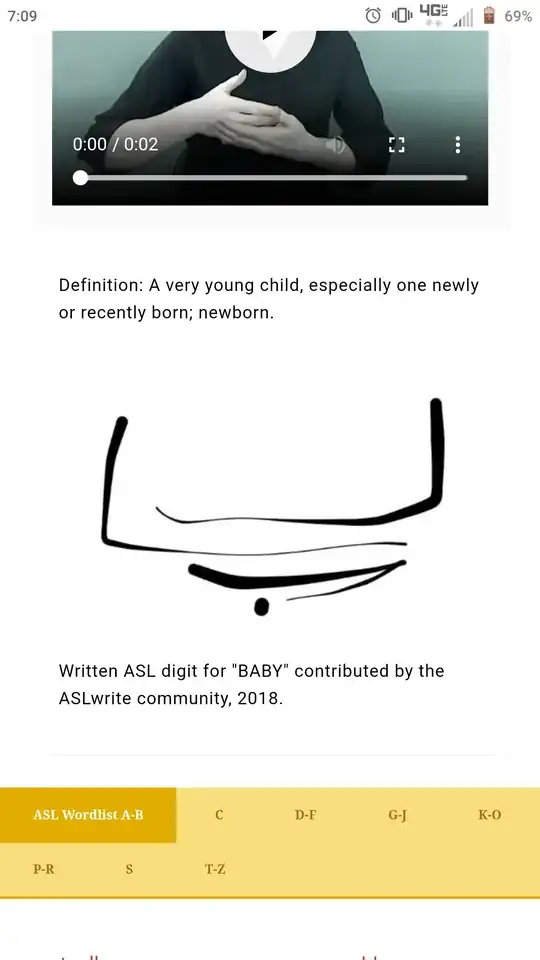
Hence, there are some writing systems for sign languages that convey hand and face movements instead of phonetics.
That said, there is a single part of sign languages that actually is phonetic, and that's the finger alphabet, where one sign corresponds to a letter in the alphabet. This is mostly used for things that have no associated sign, e.g. names of companies, towns or train stations.
And since the finger alphabet's purpose is to literally convey spoken (or actually written) language in sign language, it is phonetic.